
How Clear Payment Terms Help Businesses Reduce Late Payments
Learn how clear payment terms improve invoice communication, reduce customer confusion, support faster payments, and strengthen cash flow.
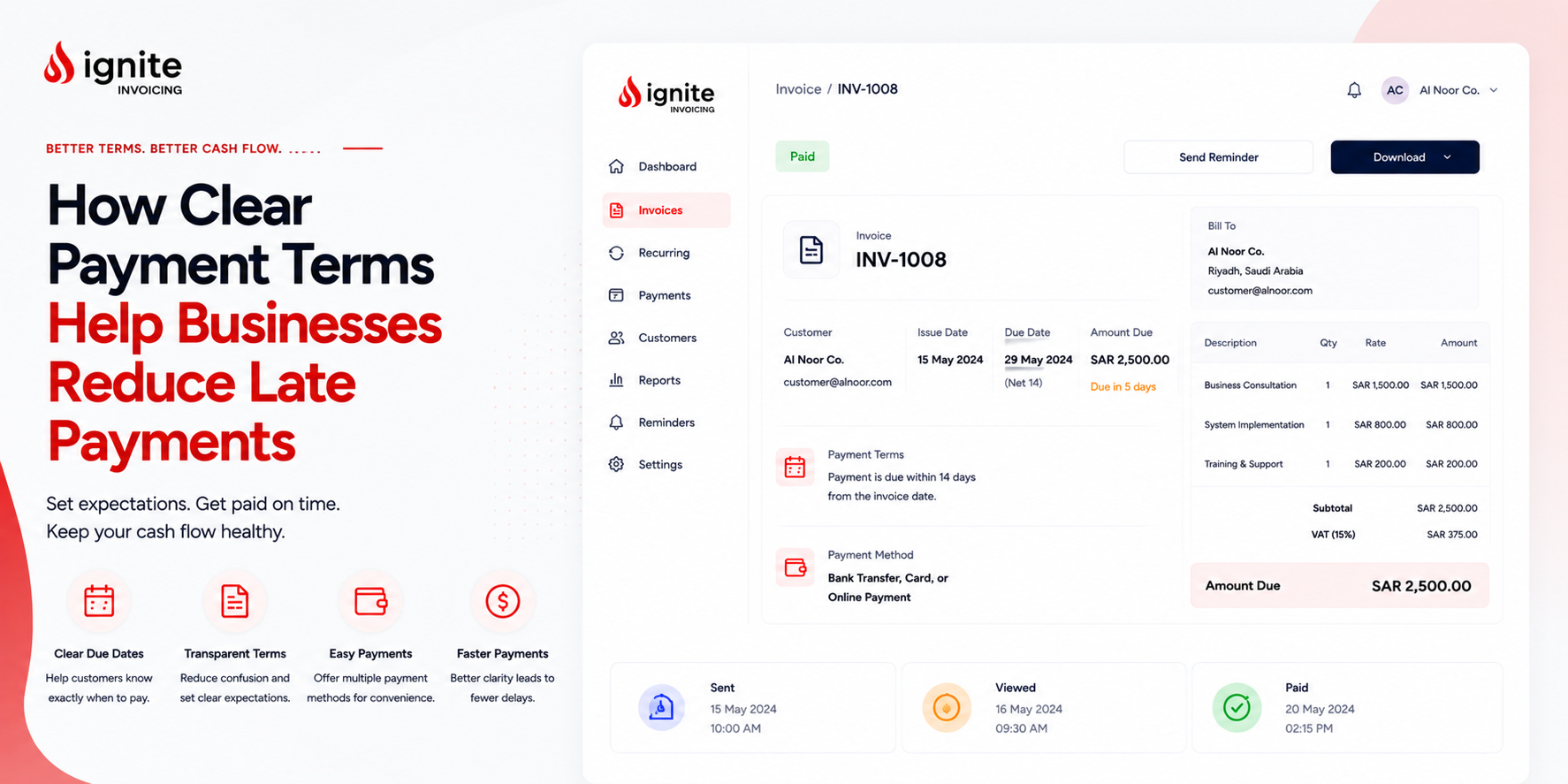
Late payments are one of the most common cash flow challenges businesses face.
While some delays happen because of customer behavior, many payment issues begin with something simpler: unclear invoice expectations.
If customers are unsure when payment is due, how to pay, or what invoice the payment applies to, delays become more likely.
Clear payment terms help remove that uncertainty.
What Are Payment Terms?
Payment terms define the rules and expectations for invoice payment.
They typically explain:
- When payment is due
- Which payment methods are accepted
- Whether late fees apply
- Where payment should be sent
- Who to contact with billing questions
Common examples include "Due upon receipt," "Net 15," "Net 30," or "Payment due by [specific date]."
The best payment terms are easy to understand and easy to act on.
Why Unclear Terms Lead to Delays
Customers are busy.
If an invoice requires them to search for missing information, confirm payment instructions, or ask follow-up questions, payment may be postponed.
Unclear terms can create problems such as:
- Missed due dates
- Payment sent to the wrong place
- Confusion over accepted payment methods
- Disputes about late fees
- Extra administrative follow-up
Even small points of confusion can slow the payment process.
Clear Terms Create Better Expectations
A well-structured invoice gives customers everything they need to pay on time.
Clear payment terms establish expectations before the invoice becomes overdue.
They help customers understand:
- The exact due date
- The balance owed
- The preferred payment method
- Any consequences of late payment
- How to resolve questions quickly
This clarity supports a smoother billing experience for both the business and the customer.
What Every Invoice Should Include
Businesses can improve invoice clarity by including several key details.
A Specific Due Date
Instead of relying only on terms like "Net 30," include the exact date payment is due.
For example:
Payment due: July 10, 2026
A specific date reduces ambiguity.
Accepted Payment Methods
Customers should know whether they can pay by credit card, ACH, bank transfer, check, or another method.
Including payment instructions directly on the invoice makes the process easier.
Late Payment Policy
If late fees apply, explain them clearly and professionally.
The goal is not to surprise customers. The goal is to set expectations upfront.
Invoice Number and Description
Customers should be able to identify what they are paying for and match the invoice to the correct project, service, or purchase.
Contact Information
A billing contact gives customers a clear path to resolve questions before payment is delayed.
Clear Terms Improve Cash Flow
Cash flow depends on timely collections.
When invoices are easy to understand, customers are more likely to process them quickly.
Clear payment terms can help businesses:
- Reduce avoidable delays
- Minimize billing questions
- Improve customer communication
- Strengthen accounts receivable processes
- Forecast cash flow more accurately
Better communication often leads to better payment behavior.
Automation Makes Consistency Easier
Even strong payment terms lose effectiveness if they are applied inconsistently.
Invoice automation helps businesses standardize billing details across customers and projects.
With the right invoicing system, businesses can create reusable invoice templates, apply consistent payment terms, and reduce the risk of missing important details.
This makes the payment process more professional and scalable.
Conclusion
Clear payment terms are a simple but powerful part of effective invoicing.
They reduce confusion, improve communication, and help customers understand exactly how and when to pay.
Businesses that want fewer late payments should start by making every invoice easier to understand.
Because the easier an invoice is to pay, the more likely it is to be paid on time.
Call to Action
Ignite Invoicing helps businesses create professional invoices with clear payment terms, automated workflows, and better visibility into every stage of the payment process.