
How Recurring Invoices Save Time and Improve Billing Consistency
Discover how recurring invoices help businesses automate billing, reduce administrative work, improve consistency, and support healthier cash flow.
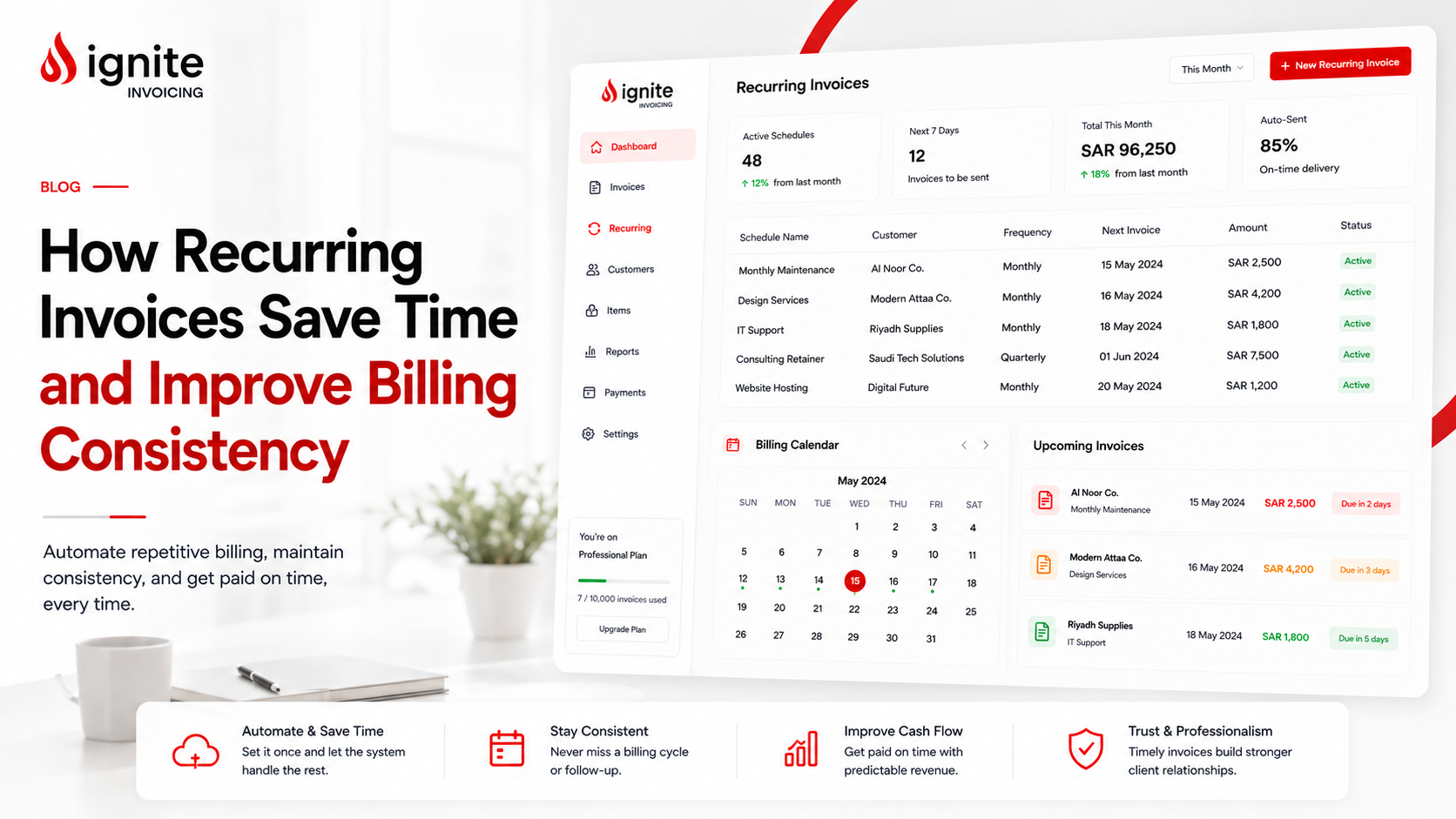
Many businesses provide services on a predictable schedule.
Monthly retainers, maintenance agreements, subscriptions, recurring consulting engagements, and ongoing service contracts often require invoices that look nearly identical month after month.
Yet many organizations continue creating these invoices manually.
Recurring invoicing offers a more efficient alternative.
By automating repetitive billing tasks, businesses can reduce administrative workload, improve consistency, and strengthen overall financial operations.
What Are Recurring Invoices?
Recurring invoices are invoices that are automatically generated and delivered on a predefined schedule.
Common billing frequencies include:
- Weekly
- Monthly
- Quarterly
- Annually
Instead of manually creating each invoice, businesses establish billing rules once and allow the system to handle future invoice generation.
Why Manual Recurring Billing Creates Problems
At first glance, manually sending invoices may not seem like a major issue.
However, as customer counts increase, repetitive billing tasks can consume significant time.
Manual processes often lead to:
- Delayed invoices
- Inconsistent billing dates
- Administrative inefficiencies
- Missed invoices
- Increased risk of human error
These issues can negatively affect both customer experience and cash flow.
- The Benefits of Recurring Invoices
- Save Time Every Month
One of the most immediate benefits is reduced administrative work.
Instead of creating identical invoices repeatedly, businesses can automate the process and focus on higher-value activities.
Improve Billing Consistency
Customers appreciate predictable billing schedules.
Recurring invoices ensure invoices are delivered on time and according to agreed terms.
Support Faster Payments
When invoices are sent consistently and on schedule, payment cycles often become more predictable as well.
Timely billing creates clearer expectations for customers.
Reduce Errors
Automation minimizes the risk of:
- Incorrect invoice amounts
- Missed billing dates
- Duplicate invoices
- Incomplete invoice information
Consistency improves accuracy.
Improve Cash Flow Planning
Predictable billing supports more accurate forecasting and financial planning.
Businesses gain better visibility into expected revenue and future receivables.
Which Businesses Benefit Most?
Recurring invoicing is particularly valuable for:
- Marketing agencies
- Consultants
- Contractors
- Managed service providers
- Subscription-based businesses
- Professional service firms
Any organization with ongoing customer relationships can benefit from billing automation.
Building a More Efficient Billing Process
Businesses seeking to improve operational efficiency should evaluate which billing activities occur repeatedly.
Automating routine processes helps teams:
- Reduce manual effort
- Improve accuracy
- Increase consistency
- Scale more efficiently
Recurring invoicing is often one of the easiest automation opportunities available.
Conclusion
Recurring invoices help businesses eliminate repetitive administrative work while improving billing consistency and financial visibility.
For organizations managing ongoing customer relationships, automation can create meaningful time savings and contribute to a healthier invoicing process.
The less time spent recreating invoices, the more time available to grow the business.
Call to Action
Ignite Invoicing helps businesses automate recurring billing, streamline invoicing workflows, and improve payment consistency through intelligent invoice automation.