

Why Faster Invoicing Helps Businesses Get Paid Faster
Learn how prompt invoicing improves payment speed, strengthens cash flow, and helps businesses create more predictable revenue cycles.
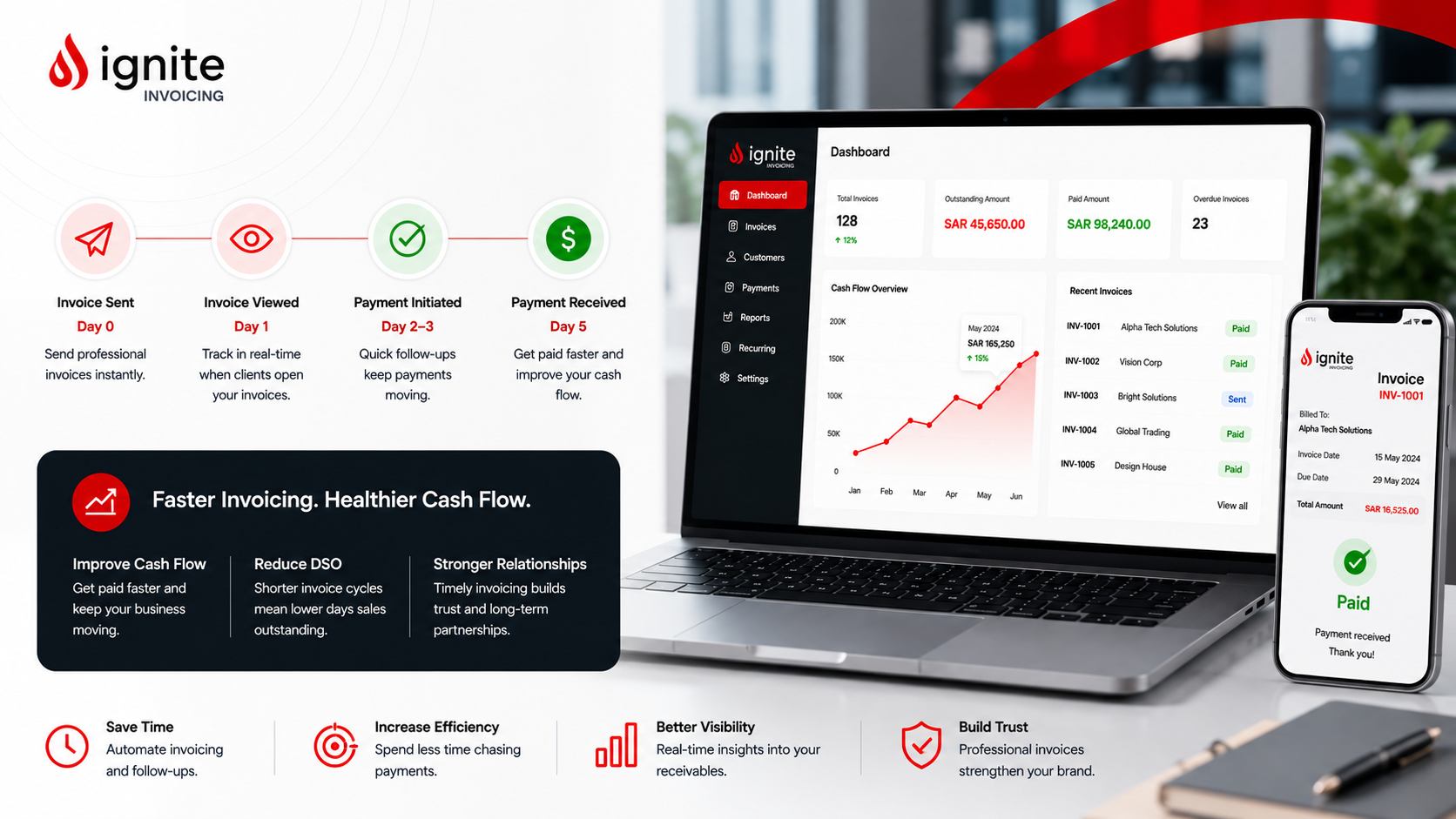
Many business owners focus on improving collections when cash flow becomes tight.
However, one of the most effective ways to accelerate payments often occurs much earlier in the billing process: sending invoices promptly.
The speed at which invoices are delivered can have a significant impact on when payments are ultimately received.
The Payment Clock Starts With the Invoice
Customers cannot pay invoices they have not received.
Every day that passes between completing work and sending an invoice delays the beginning of the payment cycle.
For example:
- Complete work on Monday
- Send invoice on Friday
- Customer pays according to net payment terms
In this scenario, several days were added to the collection timeline before the payment process even began.
Delayed Invoicing Creates Unnecessary Friction
When invoices are not sent promptly, businesses may experience:
- Longer payment cycles
- Reduced cash flow visibility
- Forgotten billable work
- Customer confusion
- Administrative bottlenecks
Even small delays can compound over time, particularly as invoice volume increases.
- Why Prompt Invoicing Improves Results
- Customers Expect Timely Billing
Sending invoices immediately after service delivery creates a clear connection between the completed work and the payment request.
Customers are more likely to review and process invoices when the transaction is still fresh in their minds.
Better Financial Visibility
Prompt invoicing gives businesses a more accurate picture of:
- Outstanding receivables
- Expected revenue
- Cash flow projections
- Collection timelines
Accurate information supports stronger decision-making.
Reduced Administrative Burden
Businesses that invoice consistently avoid accumulating large billing backlogs.
This reduces administrative pressure and helps maintain organized financial records.
The Role of Automation
Manual invoicing often contributes to delays because invoice creation depends on employee availability and workload.
Automated invoicing systems can help businesses:
- Generate invoices quickly
- Schedule recurring billing
- Deliver invoices automatically
- Trigger payment reminders
- Track payment status
Automation helps ensure invoices are sent promptly and consistently.
Building Better Invoicing Habits
Organizations seeking faster payments should consider:
- Sending invoices immediately after work completion
- Establishing standardized billing workflows
- Automating recurring invoices
- Monitoring invoice turnaround times
- Using automated reminders
These practices create a more efficient accounts receivable process.
Conclusion
Faster invoicing does not guarantee immediate payment, but it creates the conditions for faster collections.
By reducing delays at the beginning of the billing cycle, businesses can improve cash flow, increase financial visibility, and build more efficient invoicing operations.
Often, the fastest way to get paid sooner is simply to invoice sooner.
Call to Action
Ignite Invoicing helps businesses automate invoice delivery, streamline billing workflows, and create faster, more predictable payment cycles.