
Why Invoice Tracking Matters for Better Cash Flow Management
Learn how invoice tracking helps businesses monitor payment status, reduce overdue invoices, improve follow-up, and make better cash flow decisions.
Sending an invoice is only the beginning of the payment process.
The real challenge is knowing what happens after the invoice is sent.
Was it received? Has the customer viewed it? Is payment still pending? Has the due date passed? Has the invoice been paid but not reconciled?
Without reliable invoice tracking, businesses often rely on a mix of memory, email searches, spreadsheets, and bank account checks to understand where payments stand.
That lack of visibility can create unnecessary cash flow stress.
Invoice tracking helps businesses move from reactive billing to proactive payment management.
What Is Invoice Tracking?
Invoice tracking is the process of monitoring each invoice from creation through final payment.
A strong invoice tracking process helps businesses see whether an invoice is:
- Drafted
- Sent
- Viewed
- Pending payment
- Overdue
- Partially paid
- Paid
- Closed
This visibility makes it easier to understand what requires attention and what is already resolved.
Why Payment Visibility Matters
Cash flow depends on more than revenue.
A business may have strong sales and still experience financial pressure if payments are delayed or difficult to track.
Invoice tracking gives teams a clearer view of expected incoming payments, outstanding balances, and overdue accounts.
That clarity supports better decisions around:
- Payroll
- Vendor payments
- Hiring
- Marketing spend
- Equipment purchases
- Tax planning
- Growth investments
When payment information is scattered, business decisions become harder.
When invoice status is visible, financial planning becomes more reliable.
Invoice Tracking Reduces Missed Follow-Ups
One of the most common causes of overdue invoices is inconsistent follow-up.
A busy business owner may plan to check on an unpaid invoice later, only to forget as new work comes in.
Invoice tracking helps identify which invoices need action.
Instead of searching manually, businesses can quickly see which customers require a reminder, which invoices are approaching their due date, and which payments are already late.
This makes follow-up more timely and less stressful.
It Helps Prioritize Collection Efforts
Not every invoice requires the same level of attention.
A small invoice due tomorrow may not need immediate follow-up. A large invoice that is 20 days overdue may require action right away.
Invoice tracking helps businesses prioritize based on:
- Invoice amount
- Due date
- Days overdue
- Customer payment history
- Payment status
- Outstanding balance
This prevents teams from wasting time on low-priority tasks while important receivables go unnoticed.
It Improves Customer Communication
When businesses have accurate invoice status information, customer conversations become clearer.
Instead of sending vague follow-ups, teams can reference specific invoice numbers, due dates, amounts, and payment status.
Clear communication helps reduce confusion and makes it easier for customers to respond.
For example, a business can say:
"Invoice #1048 for $2,400 was due on June 10 and appears unpaid. Here is the payment link for your convenience."
That is more effective than a generic reminder.
It Supports Better Forecasting
Forecasting depends on knowing what money is expected and when it may arrive.
Invoice tracking gives businesses a clearer picture of receivables, helping them estimate future cash availability more accurately.
This is especially important for service-based businesses, agencies, consultants, contractors, and companies with longer payment cycles.
Better tracking leads to better forecasting.
Better forecasting leads to better planning.
Manual Tracking Becomes Hard to Scale
Spreadsheets may work when a business sends only a few invoices each month.
But as invoice volume grows, manual tracking becomes more difficult to maintain.
Common issues include:
- Outdated payment records
- Missed invoice updates
- Duplicate follow-up
- Delayed reconciliation
- Limited visibility across team members
- Higher risk of human error
An automated invoice tracking system helps reduce these risks by keeping payment information organized and easier to access.
What Businesses Should Track
A useful invoice tracking process should include:
- Invoice number
- Customer name
- Invoice date
- Due date
- Total amount
- Amount paid
- Remaining balance
- Payment status
- Days overdue
- Reminder history
- Notes or disputes
These details help businesses understand both individual invoice status and overall accounts receivable performance.
Conclusion
Invoice tracking is more than an administrative task.
It is a core part of cash flow management.
When businesses know which invoices are sent, pending, overdue, or paid, they can follow up faster, forecast more accurately, and make better financial decisions.
The payment process should not depend on guesswork.
With clear invoice tracking, businesses gain the visibility they need to stay organized, reduce overdue payments, and strengthen financial control.
Call to Action
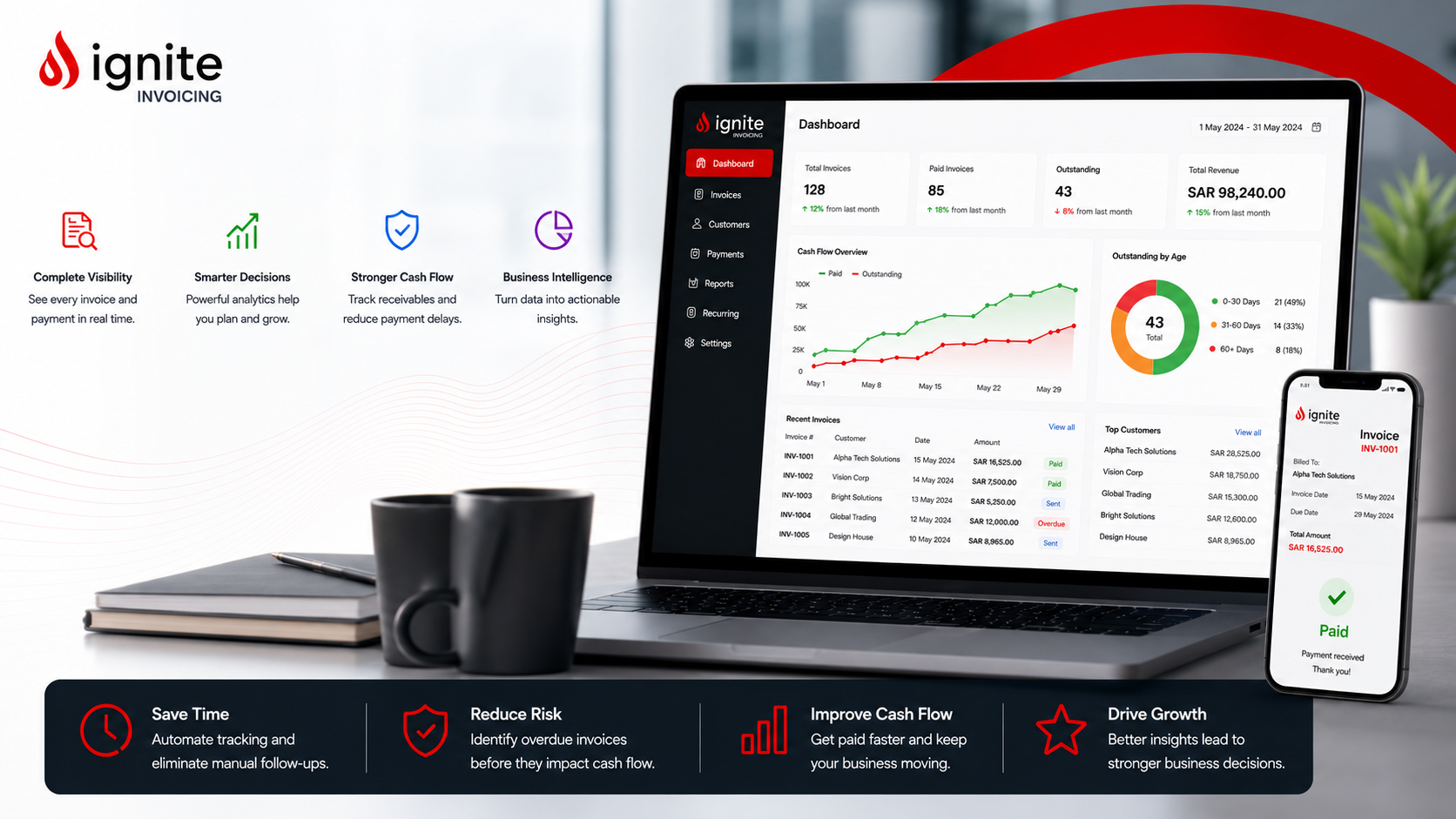
Ignite Invoicing helps businesses track invoices from sent to paid, monitor overdue balances, automate follow-up, and gain clearer visibility into cash flow.