
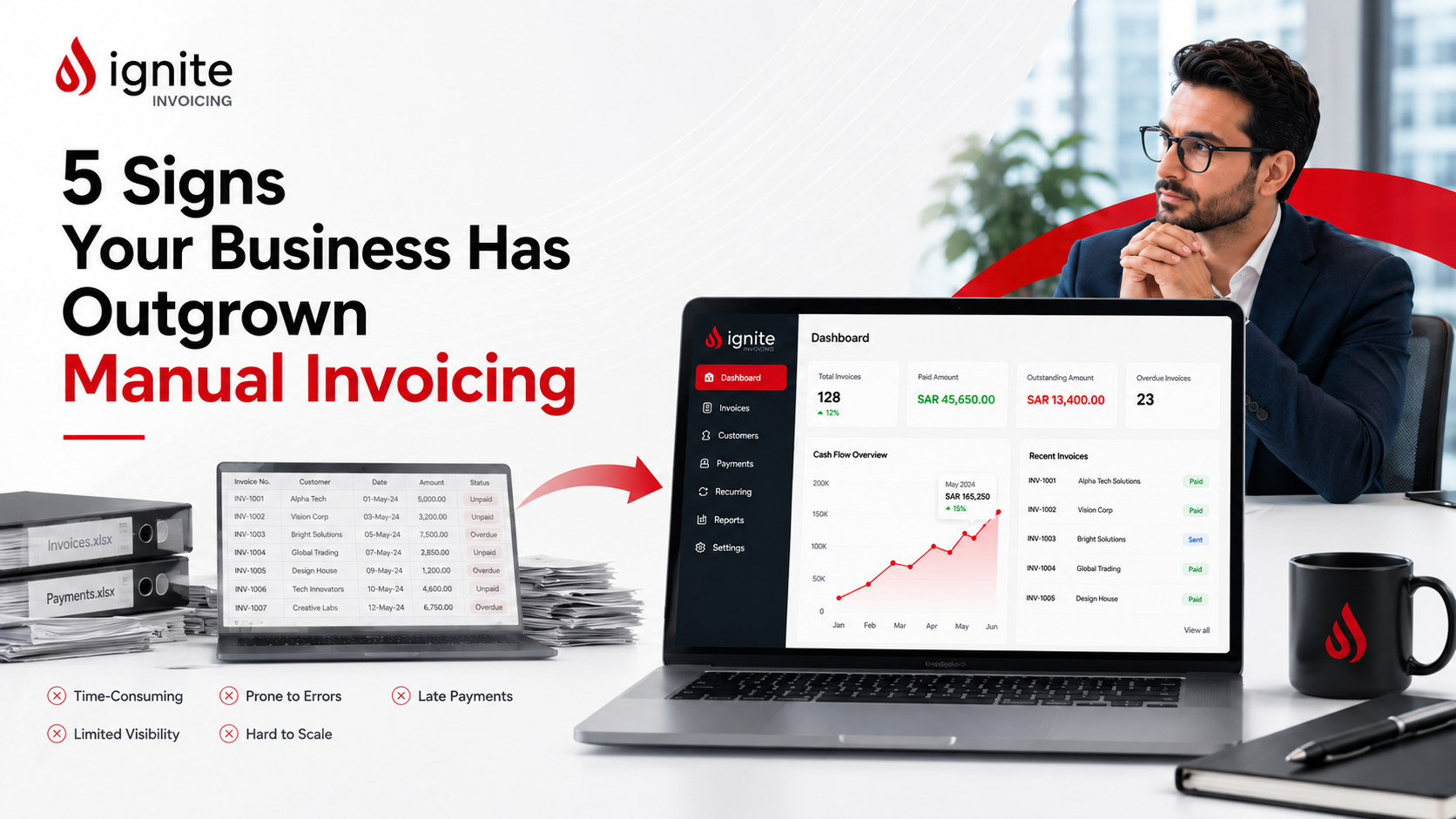

5 Signs Your Business Has Outgrown Manual Invoicing
Many businesses begin with simple invoicing processes.
A spreadsheet, a document template, and a manual reminder system may work perfectly during the early stages of growth.
However, as customer volume increases and operations become more complex, manual invoicing often becomes a bottleneck.
Recognizing the warning signs early can help businesses improve efficiency and support continued growth.
1. Invoicing Consumes Hours Every Week
One of the clearest indicators is the amount of time spent creating, sending, and tracking invoices.
As invoice volume increases, manual processes become increasingly difficult to manage.
Administrative tasks begin taking time away from revenue-generating activities such as sales, customer service, and business development.
2. You’re Managing Payments in Multiple Spreadsheets
Spreadsheets can be useful tools, but they often become difficult to maintain as billing complexity grows.
Businesses frequently end up tracking:
- Sent invoices
- Outstanding balances
- Customer payment history
- Follow-up schedules
Across multiple files and systems.
This increases the likelihood of errors and missed payments.
3. Payment Follow-Ups Are Inconsistent
Following up on overdue invoices manually requires discipline and time.
When businesses become busy, payment reminders are often delayed or forgotten entirely.
Inconsistent communication can lead to longer payment cycles and reduced cash flow predictability.
4. Cash Flow Feels Less Predictable
As invoice volume grows, visibility becomes increasingly important.
Without centralized reporting, it becomes difficult to answer questions such as:
- Which invoices are overdue?
- Which customers consistently pay late?
- How much revenue is outstanding?
Limited visibility makes forecasting more challenging.
5. Growth Is Creating Administrative Bottlenecks
Growth should increase opportunity, not paperwork.
If onboarding new customers automatically creates more billing complexity, manual invoicing may be limiting scalability.
Modern invoicing systems help businesses handle increased transaction volume without requiring proportional increases in administrative effort.
Why Automation Solves These Challenges
Automated invoicing platforms help businesses:
- Create invoices faster
- Schedule recurring billing
- Automate payment reminders
- Track invoice status in real time
- Improve financial visibility
By reducing repetitive tasks, organizations can focus on serving customers and growing revenue.
Conclusion
Manual invoicing isn’t inherently bad—it simply has limitations.
As businesses grow, those limitations become more visible through increased workload, inconsistent follow-up, and reduced financial visibility.
Recognizing these signs early allows organizations to implement systems that support long-term growth and operational efficiency.
Call to Action
Ignite Invoicing helps growing businesses automate billing, improve payment tracking, and simplify accounts receivable management—so teams can spend less time on administration and more time on growth.

